
Email Address
sales@filtercartridgetech.com
Phone Number
(+86) 15057941949
Our Location
Zhejiang, China
sales@filtercartridgetech.com
(+86) 15057941949
Zhejiang, China
Selecting the right filter cartridge is essential for achieving optimal filtration performance, maintaining system efficiency, and ensuring product quality. One of the most common questions in filtration is understanding the difference between nominal and absolute ratings and knowing which type of filter cartridge is suitable for your application.
This guide explains the key differences between nominal and absolute rated filter cartridges, their advantages, typical applications, and provides guidance on how to choose the right one for your system.
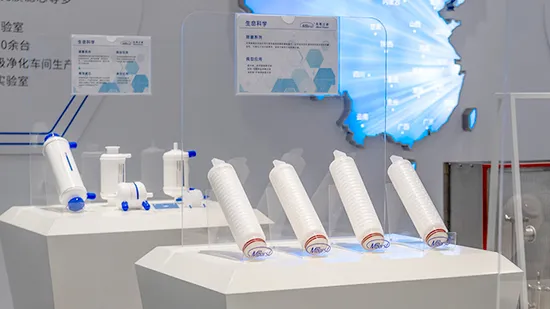
A nominal rated filter cartridge is designed to remove a certain percentage of particles of a specified size.
Nominal filters are often more cost-effective than absolute filters and provide longer service life in non-critical applications.
An absolute rated filter cartridge is designed to remove virtually all particles of the specified size.
Absolute filters are generally more expensive but ensure higher protection for downstream equipment and processes.
Different filtration requirements call for different filter cartridge designs. The three most commonly used cartridge technologies in water treatment systems are depth filter cartridges, pleated filter cartridges, and high flow filter cartridges.
| Feature | Nominal Rating | Absolute Rating |
|---|---|---|
| Filtration Efficiency | ~85–95% | ≥99.9% |
| Particle Removal | Some small particles may pass | Virtually all particles removed |
| Typical Applications | Non-critical pre-filtration | Critical filtration, sensitive processes |
| Cost | Lower | Higher |
| Pressure Drop | Lower | Slightly higher due to tighter media |
| Service Life | Longer in non-critical applications | Can be shorter if heavily contaminated |
Summary: Nominal filters are ideal for general filtration and cost efficiency, while absolute filters are required for critical applications where contamination must be strictly controlled.
Choosing the right filter rating depends on several factors:
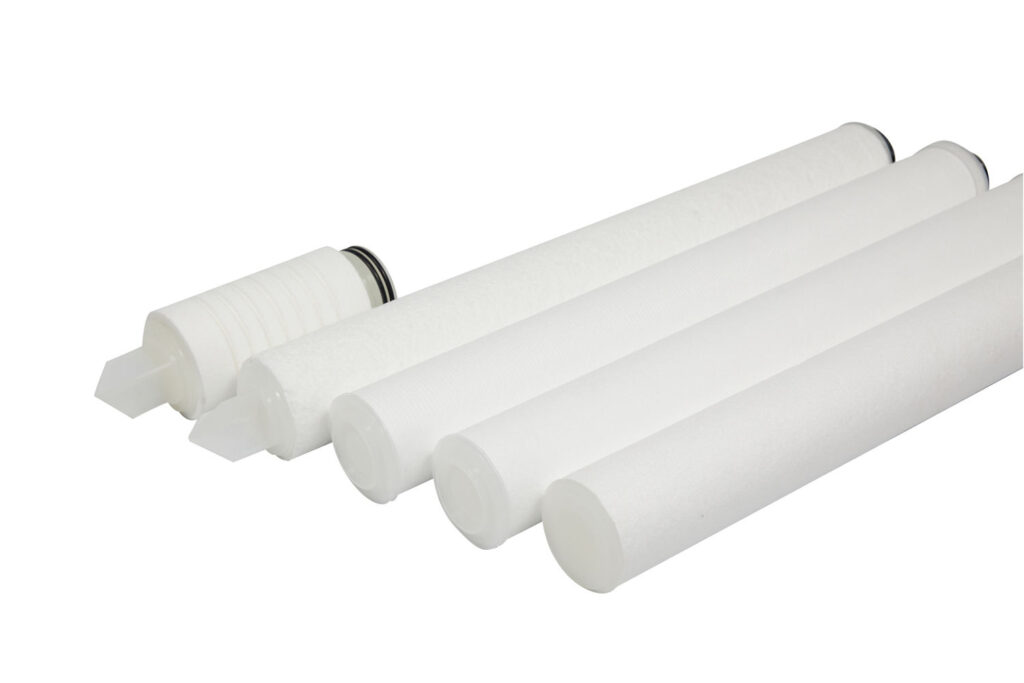
Understanding the difference between nominal and absolute rated filter cartridges is crucial for selecting the right filtration solution.
By carefully assessing contaminant type, system requirements, flow rate, industry standards, and budget, you can choose the filter cartridge that best meets your needs and ensures optimal system performance.
Nominal filters are generally not recommended for critical processes because some particles may pass through, potentially affecting product quality or damaging sensitive equipment.
Absolute filters provide higher particle removal efficiency, but they are more expensive and may not be necessary for non-critical applications. The choice depends on your system’s requirements.
Consider particle size, system tolerance, application type, and industry standards. Consult your filter supplier if unsure.
Pharmaceutical, semiconductor, food and beverage, and high-purity chemical processes typically require absolute rated filters to ensure product safety and equipment protection.