filtration

Email Address

sales@filtercartridgetech.com

Phone Number

(+86) 15057941949

Our Location

Zhejiang, China

How to Choose the Right Filter Cartridge: Depth Filter, Pleated Filter, or High Flow Filter

pleated filter cartrige manufacturer

Overview of Filter Cartridges

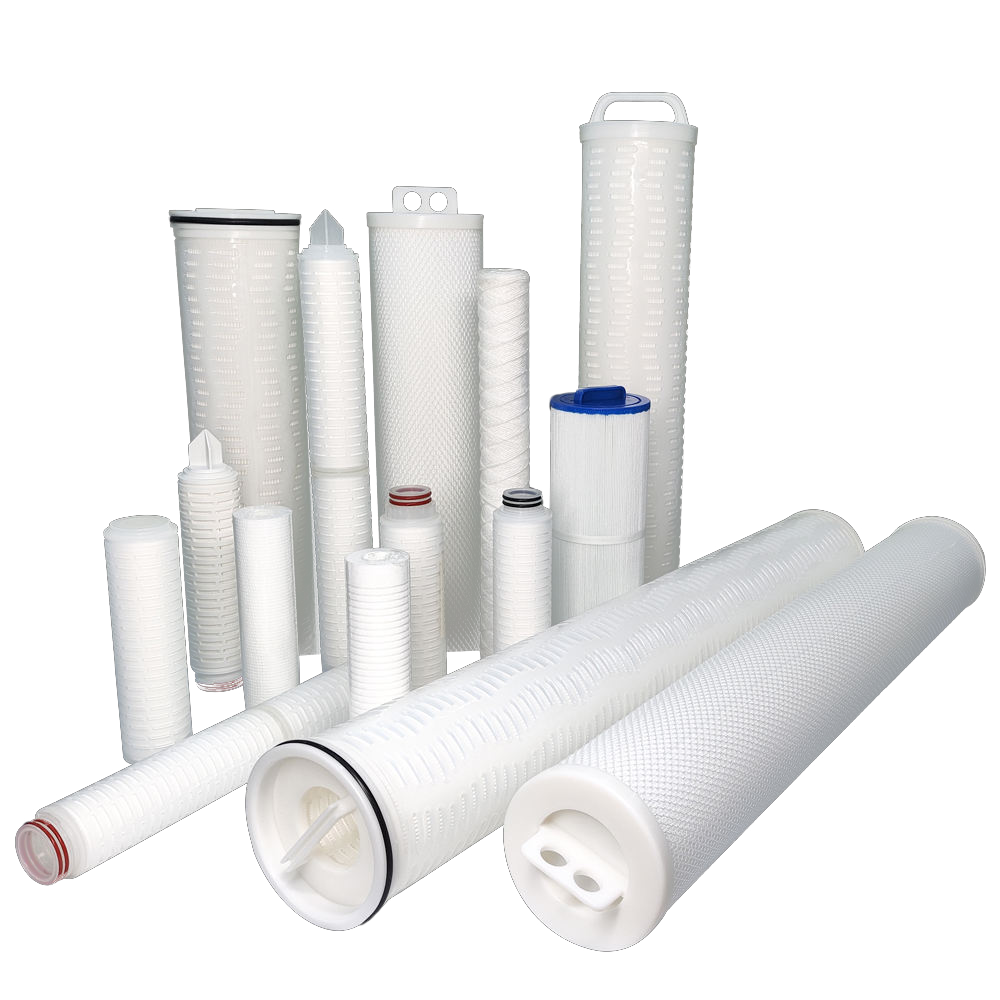
Choosing the right filter cartridge for your industrial filtration system is crucial for ensuring water quality, equipment longevity, and cost efficiency. With various types of filter cartridges available on the market, it can be challenging to decide which one suits your application best. Among the most popular options are Depth Filter Cartridges, Pleated Filter Cartridges, and High Flow Filter Cartridges. This guide will help you understand the differences, advantages, and applications of each type, so you can make an informed choice.

Pleated filter cartridges manufactuer

Importance of Cartridge Filtration

Filter cartridges provide a convenient and efficient way to implement industrial-scale filtration. By using replaceable filter elements, the system can be easily maintained and optimized over time. Proper selection of the filter cartridge is essential to ensuring reliable performance and minimizing operational costs.

1. Understanding Depth Filter Cartridges

What is a Depth Filter Cartridge?

A Depth Filter Cartridge is designed with thick layers of fibrous material that trap particles throughout the depth of the filter rather than just on the surface. Common materials include:

  • Polypropylene (PP) melt blown fibers
  • Glass fibers
  • Resin-bonded fibers

This structure allows depth filters to handle high particle loads and protect downstream equipment.

How Depth Filters Work

Depth filters use a gradual filtration process. As water flows through the cartridge:

  1. Large particles are trapped near the outer layers.
  2. Smaller particles are captured deeper within the filter.

This multi-layer filtration ensures high dirt-holding capacity and reduces frequent replacements.

Advantages

  • High dirt-holding capacity
  • Cost-effective for pre-filtration
  • Suitable for high-turbidity water

Limitations

  • Filtration precision is lower than pleated filters
  • Pressure drop increases more rapidly as the filter becomes loaded

Typical Applications

  • Industrial water pre-treatment
  • Cooling tower water filtration
  • Chemical processing
  • Municipal water pre-filtration

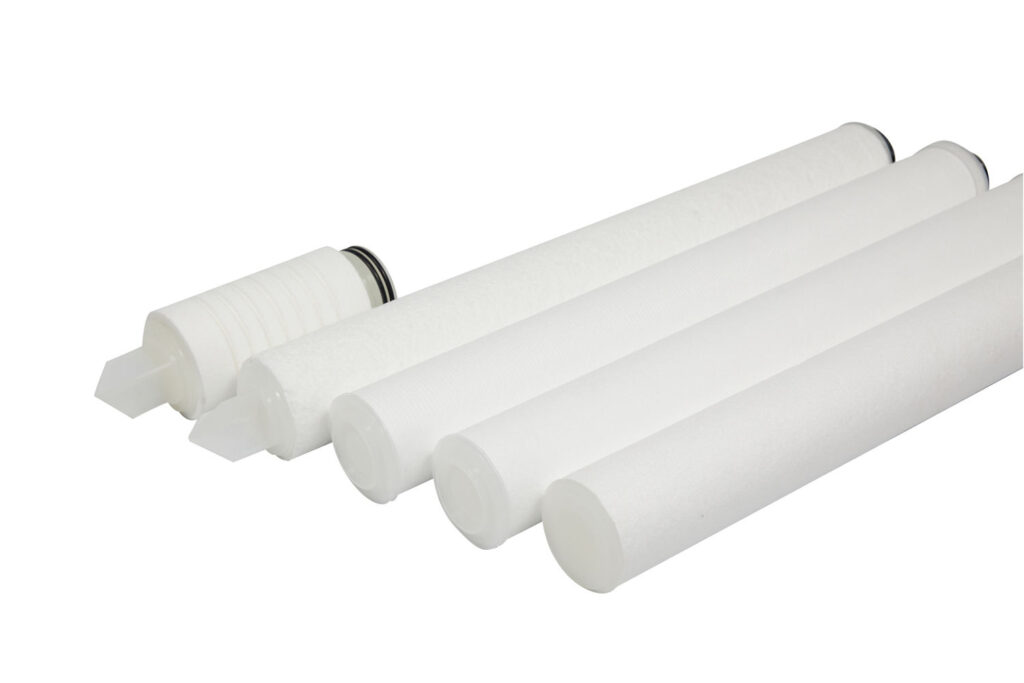
Depth Filter Cartridges

Depth Filter Cartridge
Melt Blown Filter Cartridges
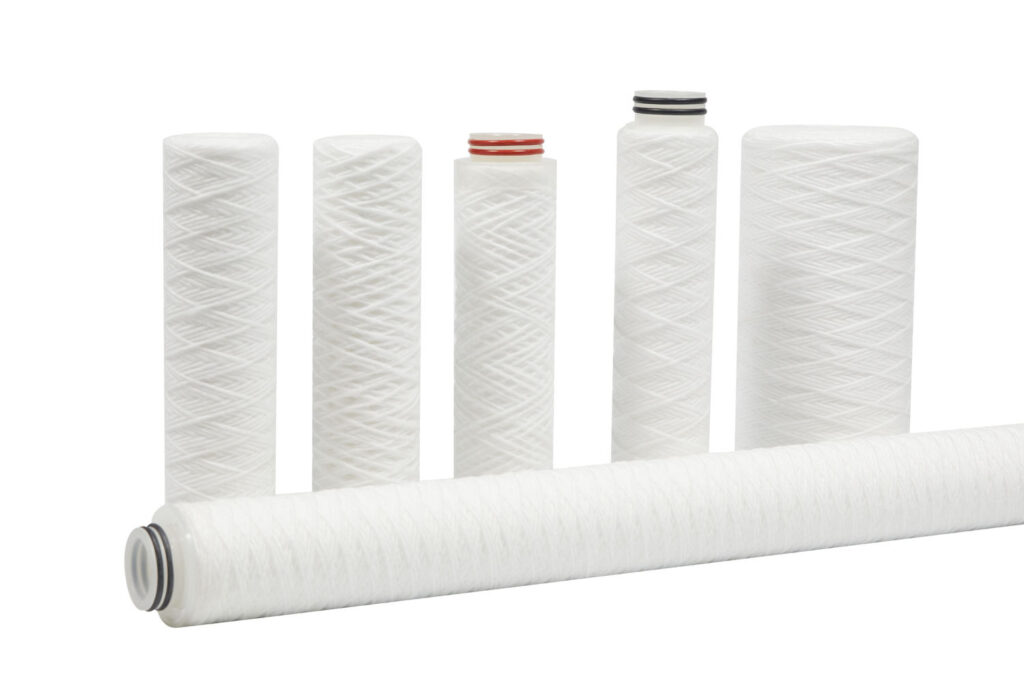
string wound filter cartridges - depth filter cartridge
String Wound Filter Cartridges

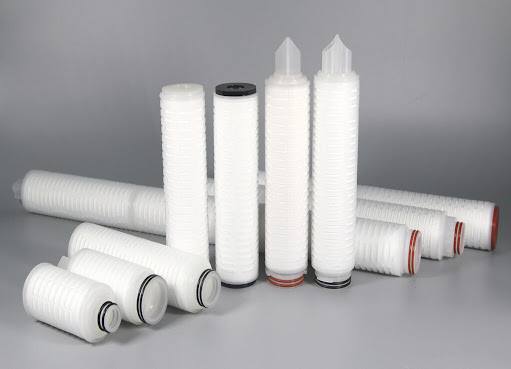
2. Understanding Pleated Filter Cartridges

What is a Pleated Filter Cartridge?

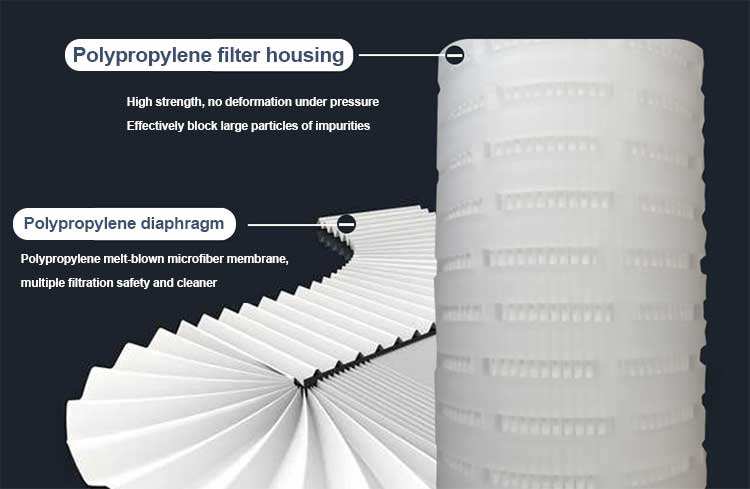
A Pleated Filter Cartridge features a folded filtration media, which increases the effective surface area. This allows for higher filtration efficiency while maintaining a stable flow rate. Pleated cartridges are commonly made from:

  • Polypropylene (PP)
  • Polyethersulfone (PES)
  • PTFE
  • PVDF
  • Nylon

How Pleated Filters Work

Pleated filters primarily rely on surface filtration:

  • Particles are trapped on the surface of the pleated media
  • The pleats allow a large filtration area in a compact design

This structure ensures precise and consistent filtration.

Advantages

  • High filtration precision (0.1–50 μm)
  • Stable pressure drop
  • Longer lifespan compared to standard depth filters
  • Suitable for applications requiring clean or sterile water

Limitations

  • Higher cost than depth filters
  • Not ideal for very high-turbidity raw water, as clogging can occur

Typical Applications

  • RO (Reverse Osmosis) pre-filtration
  • Food & beverage processing
  • Pharmaceutical & biotech filtration
  • Microelectronics and ultrapure water systems
Nominal vs. Absolute Rating Filter Cartridge
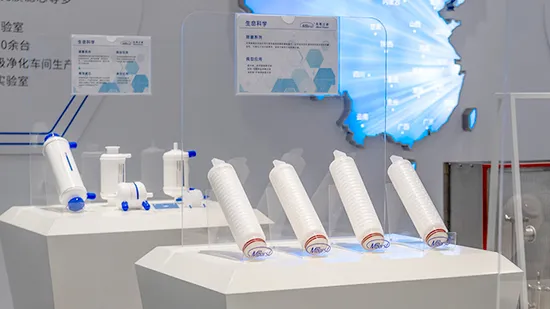
Pleated Filter Cartridges

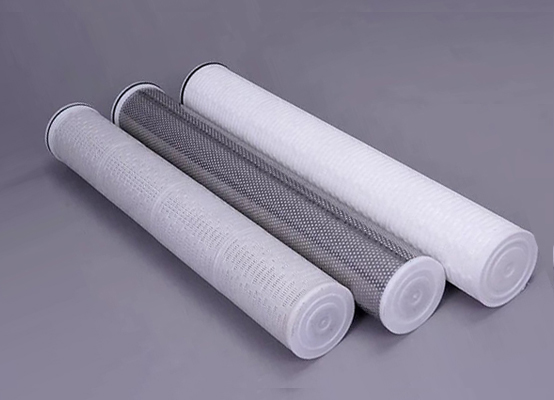
3. Understanding High Flow Filter Cartridges

What is a High Flow Filter Cartridge?

High Flow Filter Cartridges are specially designed for large flow applications. They are essentially pleated filters with larger diameter and higher surface area, often available in 40-inch or 60-inch lengths. These cartridges are commonly used in industrial systems that require high throughput.

Features of High Flow Filters

  • Large diameter (typically 6 inches / 152 mm)
  • Increased pleated surface area
  • Inside-out flow design
  • Reinforced core for structural integrity

Advantages

  • Handles very high flow rates (20–110 m³/h per cartridge)
  • Reduces the number of cartridges needed in a system
  • Lower overall system maintenance costs

Limitations

  • Single cartridge cost is higher
  • Requires sufficient housing and flow compatibility

Typical Applications

  • Seawater desalination plants
  • Power plants and cooling water systems
  • Municipal water treatment
  • Oil & gas and chemical industries
high flow filter cartridges
High Flow Filter Cartridges

4. Key Differences Between Depth, Pleated, and High Flow Filters

FeatureDepth Filter CartridgePleated Filter CartridgeHigh Flow Filter Cartridge
Filtration PrincipleDepth filtrationSurface filtrationSurface filtration (high capacity)
StructureMulti-layer fibersPleated membraneLarge-diameter pleated membrane
Filter AreaSmallMediumVery large
Flow Rate (per cartridge)1–5 m³/h3–10 m³/h20–110 m³/h
Dirt-Holding CapacityHighMediumHigh
Filtration Precision1–100 μm0.1–50 μm1–100 μm
Pressure DropIncreases fasterStableLow
CostLowMediumHigh per cartridge
Ideal ApplicationPre-filtration, raw waterPrecision filtration, clean waterLarge flow systems
Typical IndustriesWater treatment, chemicalFood, pharmaceutical, electronicsPower, municipal, desalination

5. How to Choose the Right Filter Cartridge

When selecting the right filter cartridge, consider the following factors:

1) Water Quality and Turbidity

  • High-turbidity water → Depth Filter
  • Low-turbidity, high-precision needs → Pleated Filter

2) Flow Rate Requirements

  • Small to medium flow → Depth or standard Pleated
  • Large industrial flow → High Flow Filter

3) Filtration Precision

  • Need sub-micron filtration → Pleated Filter
  • Coarse filtration → Depth Filter

4) Maintenance and Replacement

  • High dirt load → Depth Filter may require more frequent replacement
  • High Flow reduces the number of cartridges, lowering replacement frequency

5) Budget Considerations

  • Low upfront cost → Depth Filter
  • Long-term efficiency → Pleated or High Flow

6. Practical Selection Examples

ScenarioRecommended Filter TypeReason
Industrial raw water with high sedimentDepth FilterHigh dirt-holding, cost-effective
RO pre-treatment in water plantPleated FilterHigh precision, low pressure drop
Large desalination plantHigh Flow FilterHandles very high flow, reduces maintenance
Pharmaceutical clean waterPleated FilterSterile and high-quality filtration
Cooling tower waterDepth FilterHandles large particulate loads

7. How to Select Filter Cartridges Based on Detailed Parameters

When choosing the right filter cartridge for your system, it’s not enough to just pick Depth, Pleated, or High Flow. You should carefully consider technical parameters to ensure optimal performance and longevity of the filter. Here’s a detailed guide:


1) Flow Rate (Design Flow)

  • Why it matters: Filter cartridges have a maximum flow rate per unit. Exceeding it can cause high pressure drop or damage the filter.
  • How to choose:
    • Depth Filter: 1–5 m³/h per cartridge (ideal for pre-filtration)
    • Pleated Filter: 3–10 m³/h per cartridge (better for precision filtration)
    • High Flow Filter: 20–110 m³/h per cartridge (for large-scale systems)
  • Tip: Calculate the total system flow and divide by the flow per cartridge to determine the number of cartridges needed.

2) Filtration Precision (Micron Rating)

  • Why it matters: Determines what particle size the filter can remove.
  • Typical values:
    • Depth Filter: 1–100 μm
    • Pleated Filter: 0.1–50 μm
    • High Flow Filter: 1–100 μm
  • Tip: For RO pre-treatment or sterile water, use pleated filters with 0.1–5 μm. For raw water or cooling water, depth filters are sufficient.

3) Dirt Holding Capacity

  • Why it matters: Higher dirt holding reduces replacement frequency and maintenance cost.
  • Comparison:
    • Depth Filter: Very high (ideal for high-turbidity water)
    • Pleated Filter: Medium (cleaner water systems)
    • High Flow Filter: High (large surface area supports high dirt load)

4) Differential Pressure (ΔP)

  • Why it matters: Excessive ΔP can reduce flow and damage filter or housing.
  • Typical values:
    • Initial pressure drop: 0.2–0.5 bar
    • Maximum recommended ΔP before replacement: 1.5–2.5 bar
  • Tip: Always select a filter that maintains ΔP within the housing limits at your design flow.

5) Operating Temperature and Chemical Compatibility

  • Why it matters: Different materials handle temperature and chemicals differently.
  • Common filter materials:
    • PP / Polypropylene: Up to 80°C, compatible with most water
    • PES: Up to 90°C, better chemical resistance
    • PTFE: Up to 120°C, strong chemical resistance
    • PVDF: Up to 120°C, high purity applications
  • Tip: Check your fluid’s pH and chemical composition to select the right filter material.

6) Filter Cartridge Length and Diameter

  • Why it matters: Determines flow capacity and housing compatibility.
  • Common sizes:
    • Length: 10″, 20″, 30″, 40″, 60″
    • Diameter: Standard 2.5″ (63 mm), 4.5″ (114 mm), 6″ (152 mm for High Flow)
  • Tip: High Flow systems usually require 40–60” cartridges with large diameters to minimize the number of units.

7) Replacement Frequency

  • Why it matters: Frequent replacement increases cost and labor.
  • Guidelines:
    • Depth Filter: Replace when ΔP reaches maximum or flow drops
    • Pleated Filter: Longer life if pre-filtration is used
    • High Flow Filter: Can handle higher water volume → fewer cartridges → longer replacement interval

8) Example Parameter Selection

ParameterDepth FilterPleated FilterHigh Flow Filter
Flow Rate1–5 m³/h3–10 m³/h20–110 m³/h
Filtration Precision1–100 μm0.1–50 μm1–100 μm
Dirt HoldingVery HighMediumHigh
Max ΔP1.5–2.0 bar1.5–2.5 bar2.0–2.5 bar
Max Temp80°C90°C80–120°C
Common MaterialPPPP / PES / PTFE / PVDFPP / PES / PTFE
Typical Length10–40″10–40″40–60″
Replacement IntervalShortMediumLong

💡 Quick Tip:

  1. Pre-filtration first → Depth Filter (protects pleated / high flow filters)
  2. Precision next → Pleated Filter for fine particles
  3. Large systems → Use High Flow Filter to reduce number of cartridges
How to Choose Right Filter Cartridge for Filtration System

8. How to Choose Filter Cartridge Materials

Selecting the right filter cartridge material is as important as choosing the type of filter. The material determines the chemical compatibility, temperature tolerance, mechanical strength, and lifespan of the filter. Here’s a detailed guide for choosing the best material based on your application.


1) Polypropylene (PP)

  • Temperature tolerance: Up to 80°C (176°F)
  • Chemical compatibility: Resistant to acids, alkalis, and most water-based solutions
  • Applications:
    • Municipal water
    • Industrial pre-filtration
    • Cooling towers
  • Pros:
    • Cost-effective
    • Good dirt-holding capacity for depth or pleated filters
  • Cons:
    • Not suitable for strong organic solvents or high-temperature applications

2) Polyethersulfone (PES)

  • Temperature tolerance: Up to 90°C (194°F)
  • Chemical compatibility: Resistant to many chemicals and detergents
  • Applications:
    • Food and beverage
    • Pharmaceutical pre-filtration
    • RO pre-treatment
  • Pros:
    • High filtration precision
    • Good chemical resistance
  • Cons:
    • Slightly higher cost than PP

3) Polytetrafluoroethylene (PTFE)

  • Temperature tolerance: Up to 120°C (248°F)
  • Chemical compatibility: Resistant to almost all chemicals, acids, bases, and solvents
  • Applications:
    • Aggressive chemical filtration
    • High-purity industrial water
    • Laboratory and pharmaceutical applications
  • Pros:
    • Excellent chemical resistance
    • Can handle high-temperature liquids
  • Cons:
    • Higher cost
    • Flow rate slightly lower compared to PP or PES at the same size

4) Polyvinylidene Fluoride (PVDF)

  • Temperature tolerance: Up to 120°C (248°F)
  • Chemical compatibility: Very high, suitable for acids, bases, and oxidizers
  • Applications:
    • High-purity water systems
    • Pharmaceutical and biotech
    • Corrosive chemicals
  • Pros:
    • High mechanical strength
    • Excellent chemical resistance
  • Cons:
    • More expensive
    • Usually used in pleated or high-flow filters

5) Nylon (Polyamide)

  • Temperature tolerance: Up to 80°C (176°F)
  • Chemical compatibility: Resistant to water and mild chemicals, not suitable for strong acids or bases
  • Applications:
    • Laboratory water filtration
    • Food and beverage processing
  • Pros:
    • High precision filtration possible (0.1–5 μm)
  • Cons:
    • Sensitive to high pH or aggressive solvents

6) Practical Tips for Material Selection

  1. Check the fluid properties: pH, chemical composition, temperature
  2. Match material to application:
    • Municipal/industrial water → PP
    • RO pre-filtration / high-purity → PES or Nylon
    • Aggressive chemicals → PTFE or PVDF
  3. Consider lifespan vs. cost: Higher-resistance materials often have longer life, reducing maintenance
  4. Combine with filter type:
    • Depth Filter → PP or PES (cost-effective, high dirt holding)
    • Pleated Filter → PVDF, PES, PTFE (precision filtration)
    • High Flow Filter → PP or PVDF (large flow, chemical resistant)

7) Example Material Selection Table

Filter TypeRecommended MaterialKey Considerations
Depth FilterPPPre-filtration, high dirt load, cost-effective
Pleated FilterPES / PTFE / PVDFPrecision filtration, chemical resistance, high purity
High Flow FilterPP / PVDFLarge flow systems, durable, chemical compatibility

💡 Tip: Combining filter type + material + micron rating + flow rate ensures long-lasting performance, reduced maintenance, and optimal water quality.

types of filter end caps for pleated filter cartridge

9. How to Choose the Right Filter Cartridge End Cap

The end cap of a filter cartridge is a critical component that ensures a tight seal, proper fit, and leak-free performance within the filter housing. Choosing the right end cap type is essential for reliable operation, easy installation, and maintenance.


1) Common End Cap Types

End Cap TypeDescriptionApplications
DOE (Double Open End)Both ends are open; fits standard DOE housings; usually sealed with gasketsPre-filtration, municipal/industrial water
222 / 226 O-Ring End CapSingle or double O-ring groove at the end; ensures secure seal in housingsRO pre-filtration, high-purity systems, chemical filtration
Flat Cap / Solid CapOne end sealed, the other open or threadedSpecialized housings, high-pressure applications
Threaded / Bayonet End CapScrew or twist-in designEasy installation/removal, common in high-flow filters

2) Factors to Consider When Choosing End Caps

  1. Housing Compatibility
    • Check the filter housing type: DOE, 222, 226, or other custom fittings.
    • Ensure the end cap matches the groove type and diameter of the housing.
  2. Seal Type
    • O-rings provide leak-proof sealing; materials include Buna-N, EPDM, Viton, or Silicone.
    • Choose O-ring material based on temperature, chemical resistance, and water type.
  3. Filter Type & Application
    • Depth Filter → Often DOE or flat cap is sufficient.
    • Pleated Filter → 222/226 end caps are preferred for RO or high-precision systems.
    • High Flow Filter → Bayonet or threaded caps may be used for easy replacement in large housings.
  4. Temperature & Chemical Compatibility
    • High-temperature fluids → use metal or chemically resistant end caps
    • Aggressive chemicals → ensure O-ring and end cap material are compatible (e.g., Viton or PTFE-coated end caps)
  5. Ease of Maintenance
    • Quick-connect or threaded end caps simplify replacement.
    • Large flow systems benefit from end caps that allow fast cartridge swaps.

3) Practical Tips

  • Always measure the filter housing and groove dimensions before selecting end caps.
  • Match end cap type + O-ring material to your system’s pressure, temperature, and chemical exposure.
  • Consider stock availability if you plan to replace cartridges frequently.

4) Example End Cap Selection Table

Filter TypeRecommended End CapRecommended O-Ring MaterialNotes
Depth FilterDOE / Flat CapEPDM / Buna-NCost-effective, standard housings
Pleated Filter222 / 226Viton / EPDMHigh-precision systems, RO pre-treatment
High Flow FilterBayonet / ThreadedVitonEasy replacement, high-flow housings

💡 Quick Tip: Choosing the right end cap ensures your filter cartridge operates at optimal pressure, avoids leaks, and is easy to maintain, which is as important as selecting the correct filter type, material, and micron rating.
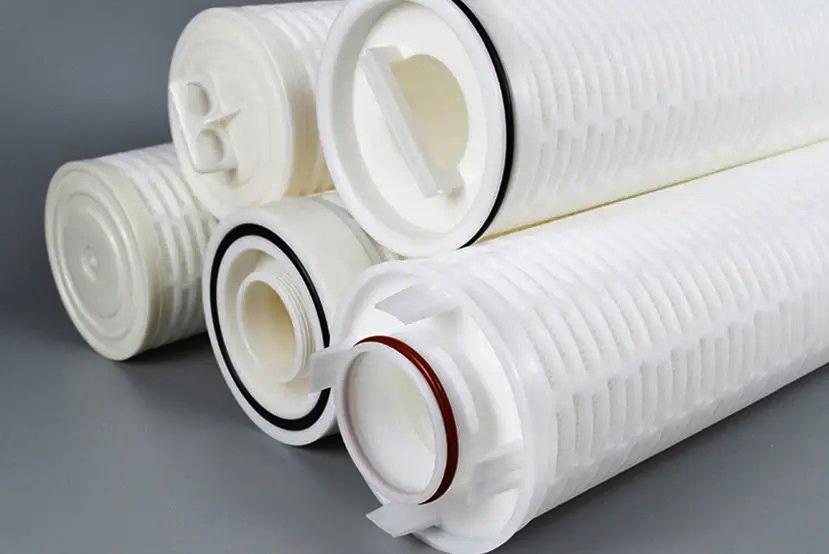
High Flow Filter Cartridge End Caps - basket
High Flow Filter Cartridge End Caps

Conclusion: Choosing the Right Filter Cartridge for Your System

Selecting the right filter cartridge is more than just picking a type—it requires careful consideration of flow rate, filtration precision, dirt-holding capacity, material compatibility, and end cap design. By understanding the differences between Depth Filter Cartridges, Pleated Filter Cartridges, and High Flow Filter Cartridges, and by evaluating your system requirements and water quality, you can make an informed decision that optimizes both performance and cost-efficiency.

Key Takeaways:

  1. Depth Filter Cartridges are ideal for pre-filtration and high-turbidity water, offering high dirt-holding capacity at a lower cost.
  2. Pleated Filter Cartridges provide high filtration precision and stable flow, suitable for RO pre-treatment, pharmaceuticals, and food & beverage applications.
  3. High Flow Filter Cartridges are designed for large industrial systems, reducing the number of cartridges required and lowering maintenance effort.
  4. Material selection matters—PP, PES, PTFE, PVDF, and Nylon each have unique chemical and temperature compatibility.
  5. End caps ensure proper sealing and housing fit, influencing system reliability and ease of maintenance.

By combining filter type, material, micron rating, flow rate, and end cap selection, you can build a filtration system that is efficient, durable, and tailored to your specific application.

Final Tip: Always consult with your filter supplier or manufacturer to verify the cartridge specifications against your system’s operational conditions. This ensures maximum performance, longer service life, and reduced operating costs.

滚动至顶部